
Daily contact lenses are the simplest lenses to live with, because you open a fresh, sterile lens in the morning and throw it away at night. Whether they suit you usually depends on how often you actually wear lenses rather than how often you intend to. This guide covers who dailies work for, how they compare with monthlies, what moves the cost, and how to wear them safely.
What daily disposable contact lenses actually are
A daily disposable is a soft contact lens you wear once and then bin. There is no cleaning, no solution, and no lens case, because the lens never goes back in your eye once it has come out.
That one fact separates dailies from everything else. A monthly lens lives with you for four weeks and has to be disinfected in fresh solution every night. A daily is sterile every time you open the blister, so deposits, ageing lenses and storage mistakes drop out of the equation.
Dailies come in a fuller range than most people expect, including toric lenses for astigmatism and multifocal contact lenses for reading vision, so a more complicated prescription does not automatically rule them out.
| NOT SURE LENSES ARE EVEN AN OPTION FOR YOU? You do not have to decide anything to find out. The contact lens service at Perspective starts with an assessment of your eyes and your routine, so you learn whether lenses suit you before committing to a single box. |
Who daily contact lenses suit best
Dailies suit part-time wearers more than anyone else. Wear lenses two or three days a week, or for the odd evening when you would rather not wear glasses, and a daily is almost always the better choice.
A monthly lens starts its four-week life the moment you open it, whether you wear it thirty times or four. Wear lenses twice a week, and most of what you paid for goes in the bin unused.
Dailies tend to work particularly well for:
- People with dry, gritty or allergic eyes, because a fresh lens carries none of yesterday’s build-up
- Hay fever sufferers, since pollen that settles on a lens goes in the bin rather than getting cleaned and reused
- Teenagers and children, where a simpler routine is far more likely to be followed properly
- People who have tried lenses before and given up on the cleaning routine
RUPAL RECOMMENDS: Come to your fitting having thought about a normal week rather than an ideal one. People tell me they will wear lenses every day, then wear them twice, and we end up having fitted the wrong lens for the way they actually live.
Daily or monthly: the honest comparison
Neither type is better in the abstract. It depends on how many days a week you wear lenses, how your eyes behave, and what you are realistically willing to do at bedtime.
Dailies win on convenience, hygiene, and part-time wear. Nothing to clean, nothing to store, no lens sitting in solution that was topped up rather than replaced, and no case quietly growing something in a bathroom cabinet.
Monthly contact lenses usually win on cost per wear if you are in lenses most days, and they remain the only option for some prescriptions where no daily equivalent is made. They also produce less packaging, which matters to a lot of people.
Most people asking already know how often they will wear lenses and are quietly hoping the answer is the cheaper one. Give your optometrist the real number of days and you will get a better recommendation out of it.
| GET THE COMPARISON DONE PROPERLY. The only way to know is to have your eyes measured and your routine talked through. You can book a contact lens appointment at the practice on England’s Lane in Belsize Park, and leave knowing which lens fits your week as well as your prescription. |
What affects the cost of daily contact lenses
Cost is the question everyone asks and the one with the least useful general answer, because dailies vary so much by prescription and brand. What is worth understanding is what moves it.
- How many days a week you wear them. Dailies are priced per lens, so cost tracks use almost exactly. Two days a week costs roughly a third of six days.
- Your prescription. Toric contact lenses for astigmatism and multifocal lenses for reading vision both sit above a standard single vision daily, because there is more design work in them.
- The lens material. Silicone hydrogel lenses let more oxygen reach the eye than older hydrogel materials and usually sit at the higher end.
- Whether aftercare is included. Some practices fold the fitting and follow-up checks into a monthly payment while others charge separately, so ask which you are being quoted.
For current figures, the pricing and FAQ page is the place to look, and for a figure against your own prescription it is quicker to ring or email the practice than to compare list prices online.
Worth saying plainly: cheapest per box is not the same as cheapest per year. A lens that saves a little but feels dry by four in the afternoon ends up unopened in a drawer, and unworn lenses are the most expensive lenses there are.
How to wear daily contact lenses safely
Almost every contact lens problem comes from handling rather than from the lens itself, which is good news, because handling is the part you control.
Wash and dry your hands every single time
Not most times. Every time, before the lens goes in and before it comes out, and dry them properly too. The College of Optometrists guidance on contact lenses is worth two minutes if you are new to this.
Keep lenses away from water
Never rinse a lens in tap water and never let one sit in it. Organisms that live harmlessly in a water supply can cause a serious corneal infection once a lens holds them against the eye. No showering and no swimming in lenses either, however well your goggles fit.
Never wear a daily twice, and never sleep in one
Wearing a lens again is not a saving. A daily has no disinfection step in its life, so one that has been out and gone back in carries everything it met in between. Sleeping in lenses is a bigger problem again, because a closed eye gets far less oxygen and overnight wear substantially raises the risk of corneal infections that can damage sight.
Keep a current pair of glasses
Everybody gets the day when an eye is red, and a lens is the last thing that should go near it, so keep a pair of glasses you can actually see out of.
| DO NOT WAIT ON THIS ONE. If an eye becomes red and painful, sensitive to light, blurred, or discharging, take the lens out, leave it out, and get advice the same day. Do not put it back in and do not wait for a routine appointment. Contact your optometrist, call NHS 111 or go to an eye casualty department. |
RUPAL RECOMMENDS: If a lens ever feels gritty, looks cloudy or leaves the eye red when you take it out, put your glasses on and leave the lens out for the rest of the day. A daily is designed to be thrown away, so there is never a good reason to persevere with an uncomfortable one.
Sport, travel and the occasional evening
A fresh lens every time removes the worry of one that has been sitting in a case since the last match, and there is no solution bottle rattling round a kit bag or failing the liquids rules at the airport. Swimming stays the exception, so use prescription goggles instead. If your child is asking, particularly for sport or alongside myopia management, that same simplicity is a large part of why dailies are so often the right place to start.
Why the fitting matters more than the lens you choose
A contact lens sits on the surface of your eye, so it has to be the right shape as much as the right power. A glasses prescription is not a contact lens prescription, and never has been.
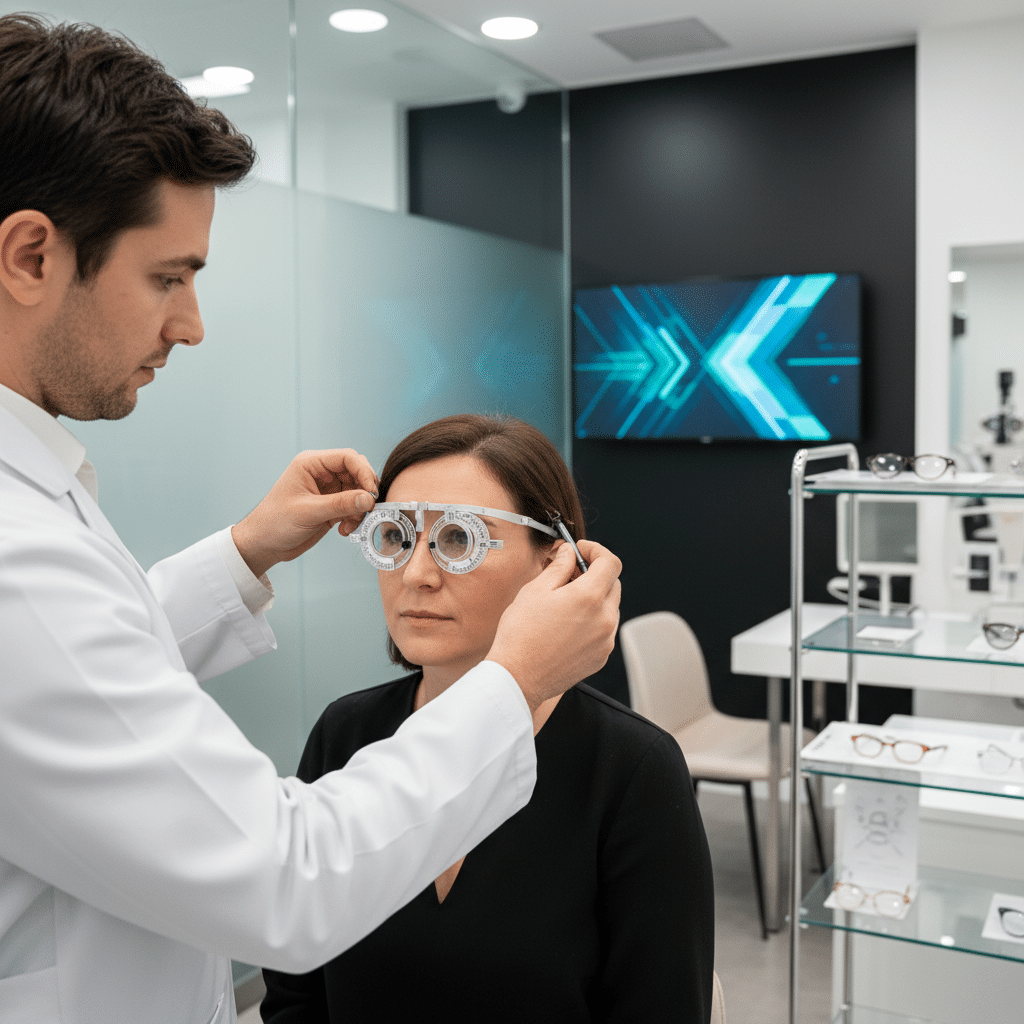
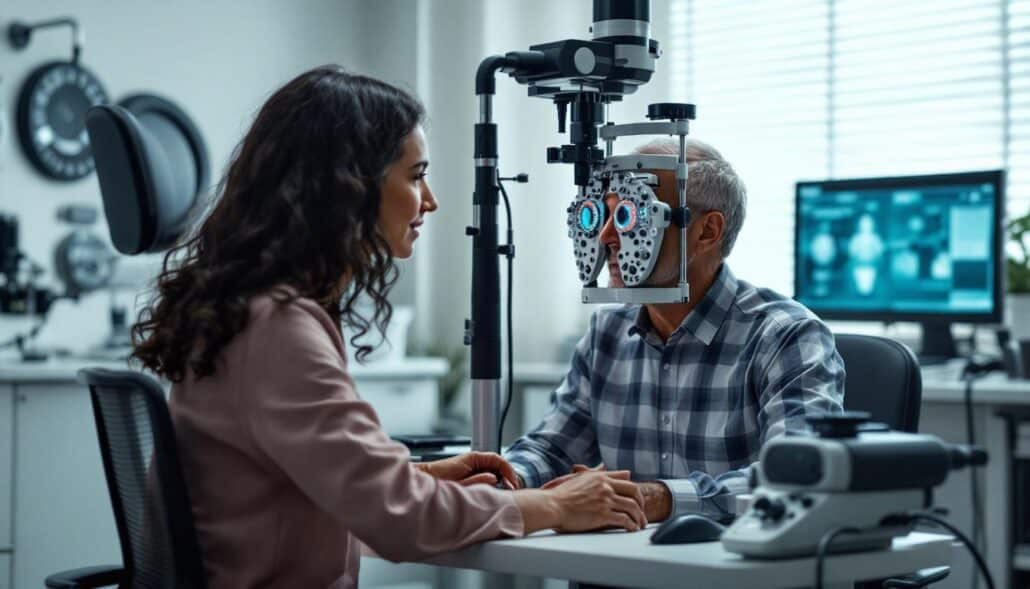
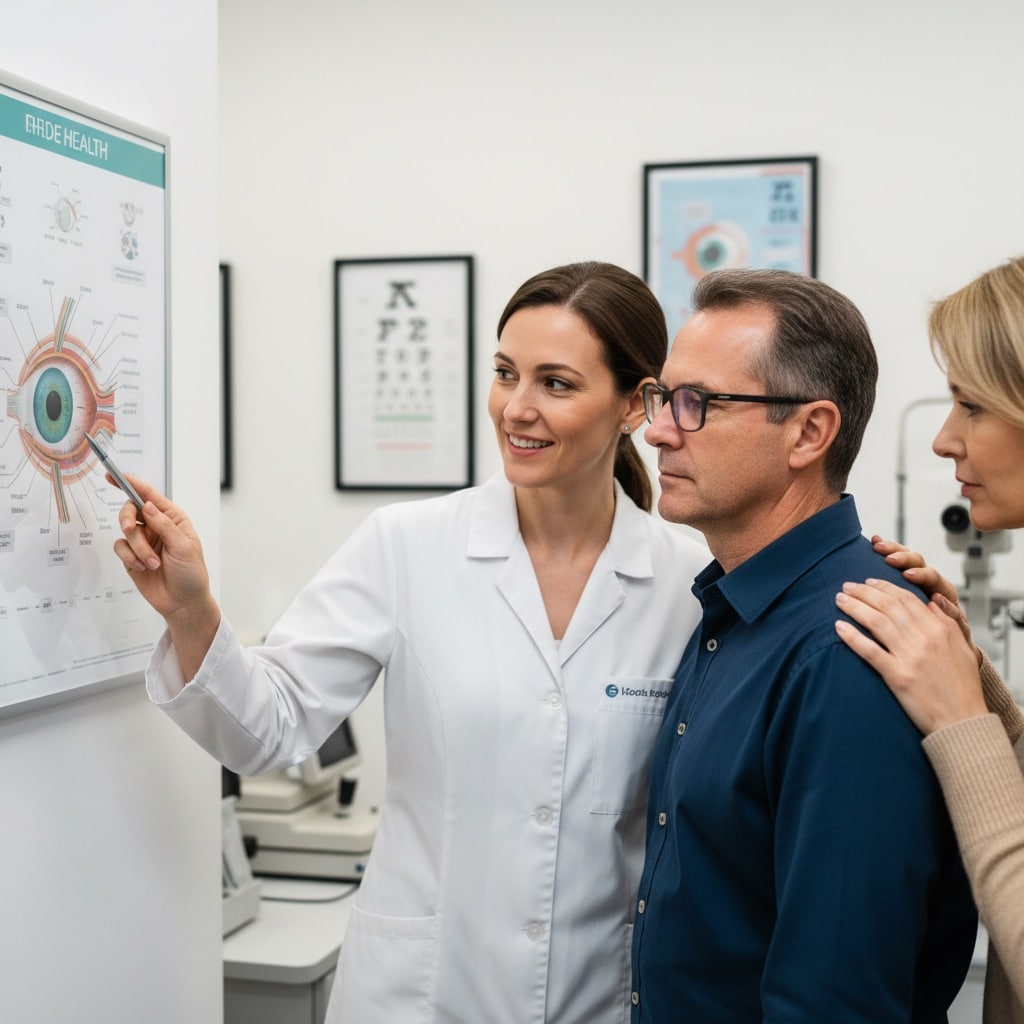
A proper assessment starts with how you actually spend your days, then looks at the front structures of your eye, checks your tear film, and measures the curvature of your cornea. Those measurements narrow thousands of options down to the handful worth trying on you.
You are then taught to put a lens in and take it out, which almost nobody manages the first time elegantly. You leave with a trial and come back a week or two later so someone can see how your eyes have responded. A check every six to twelve months then keeps your contact lens specification current, because it carries an expiry date and you cannot order lenses past it.
This is where time matters. The sight test behind your lenses at Perspective runs to a full 45 minutes rather than the 20-minute slot that has become the norm elsewhere, which is the whole point of how the practice works. You get shown properly, you get to fumble it a few times, and you get to ask the question you were embarrassed to ask.
RUPAL RECOMMENDS: Book your aftercare check for the afternoon and come in wearing the lenses, not carrying them. I need to see how your eyes look after a normal day in them, and a lens that felt perfect at nine in the morning tells me almost nothing.
Common questions about daily contact lenses
Can I wear daily contact lenses every day?
Yes, provided your optometrist has confirmed your eyes suit full-time wear, and plenty of people do. If you are in lenses most days, compare dailies with monthlies on cost, because the gap widens with use.
Are daily contact lenses better for your eyes than monthlies?
They carry a lower risk of the problems that come from cleaning and storage, because a daily involves neither. That is not the same as monthlies being unsafe. The risks that matter most are sleeping in lenses, letting them touch water, and skipping checkups.
Can I swim or shower in daily contact lenses?
It is best not to. Tap, pool, and seawater can all carry organisms that cause serious eye infections, and a lens holds them against the eye. Prescription goggles are the safer route.
Do I need a separate prescription for contact lenses?
Yes. A glasses prescription gives the power but nothing about the shape and size of lens that will sit comfortably on your eye. A contact lens specification comes out of a fitting, carries its own expiry date, and is what any supplier should be asking you for before selling you lenses.
Ready to find out whether dailies suit you?
If you have been curious about lenses for a while, or wore them once and drifted away, the next step is a simple one. Book a contact lens appointment, and you will get an unhurried assessment, an honest answer on whether dailies or monthlies fit your week, and as long as you need to get comfortable handling them. You will find the practice on England’s Lane in Belsize Park, a short walk from Belsize Park and Chalk Farm on the Northern line and from Swiss Cottage on the Jubilee line.
If you would rather start smaller, read what the contact lens service involves, or take the fifty pound voucher towards your eyewear and come in when you are ready.