
Your eyes work harder than almost any part of your body, yet they rarely ask for anything in return. A proper adult eye examination is your chance to give something back. It is far more than a quick look at whether you need glasses. Done well, it is a careful assessment of how clearly you see and how healthy your eyes truly are, often spotting subtle changes long before you would ever notice them yourself.
This guide covers everything you need to know about adult eye examinations: what actually happens during your appointment, how often you should book, what your results mean, and how to care for your sight in between. It comes from the team at Perspective Optometrists, an independent practice in Belsize Park where eye care is unhurried, personal, and genuinely thorough.
If it has been more than two years since your last visit, you can book an eye examination whenever the time feels right. There is no pressure, only the reassurance of knowing where your eye health stands.
What an adult eye examination really involves
It helps to think of an eye examination as a health check for your eyes, rather than simply a sight test. Yes, your optometrist measures how well you see and works out whether glasses or contact lenses would help. That part matters. But the appointment also looks closely at the health of your eyes, inside and out.
This is where the real value lies. Many eye conditions develop quietly, with no pain and no obvious warning signs. A thorough examination can pick up the earliest hints of issues such as glaucoma, cataracts, and macular changes, often before they affect your vision at all. You can read more about what an exam can uncover in our guide to the common eye conditions found during eye tests.
Our full range of comprehensive eye care is built around this idea: that looking after your eyes properly means understanding the whole picture, not just updating a prescription.
What happens during your eye examination at Perspective
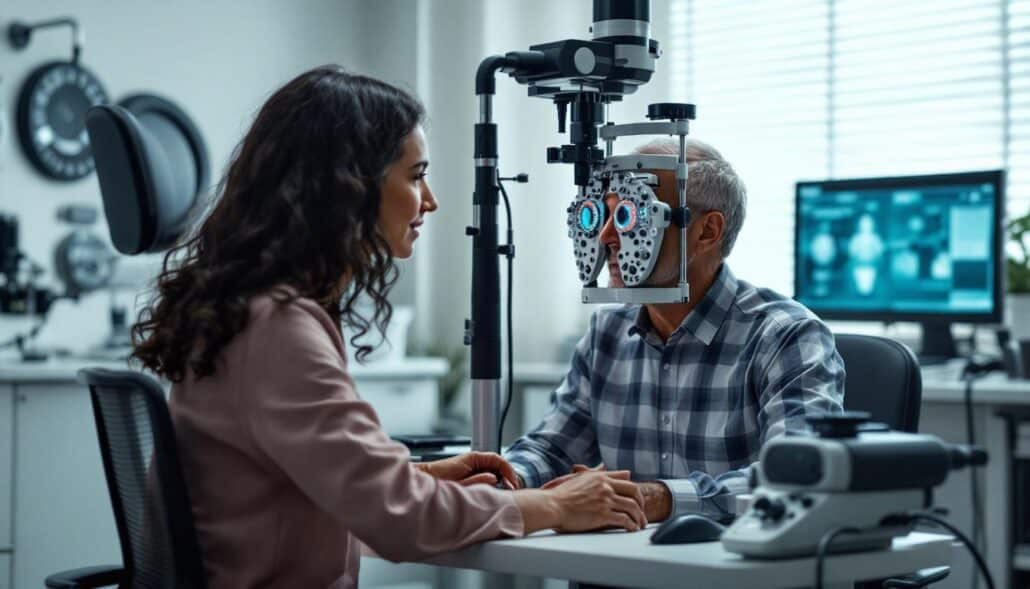
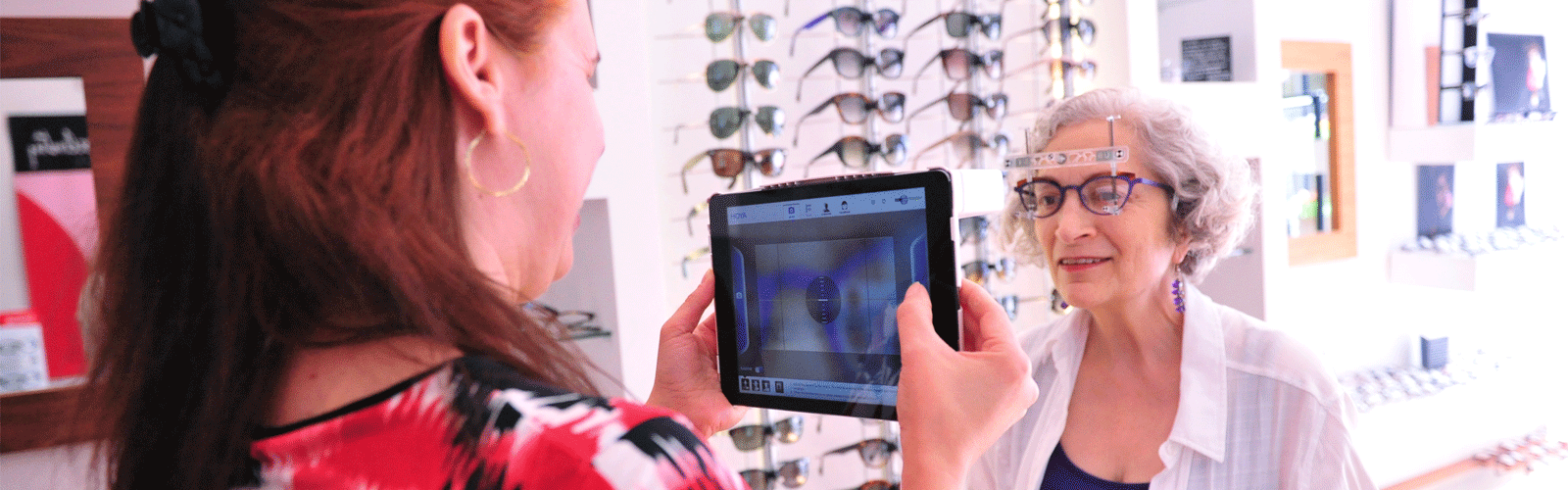
We do eye examinations a little differently. Every appointment lasts a full 45 minutes and is carried out from start to finish by one of our qualified optometrists. There are no unqualified support staff stepping in for parts of the test. The same expert who greets you is the one who examines your eyes and explains what they find.
Here is what you can expect during your visit:
- A relaxed conversation about your eyes, your general health, your family history, and how you use your vision day to day, whether that is long hours at a screen or driving at night.
- A series of checks to measure exactly how well you see and whether any correction would make daily life clearer and more comfortable.
- A close look at the health of your eyes using advanced diagnostic equipment, including detailed imaging of the back of the eye.
- A measurement of the pressure inside your eyes, which helps with the early detection of conditions such as glaucoma.
- A clear, jargon-free explanation of your results, with time to ask anything you like and a cup of tea or coffee if you fancy one.
The reason we allow more time is simple. The extra minutes mean better advice, tailored to you rather than rushed through a checklist. If you would like to feel prepared, our blog on getting ready for your eye examination and our expert tips for accurate eye test results are both worth a read. You can also learn more on our dedicated eye examinations page.
To get the most from your visit, it helps to bring your current glasses or contact lens details, a list of any medications you take, and a note of any symptoms or questions on your mind. None of it is essential, but it all helps your optometrist build the fullest picture of your eyes.
How often should adults have an eye examination?
As a general rule, most adults should have an eye examination every two years. This is the interval recommended by the NHS and supported by professional guidance from the College of Optometrists. Two years are enough to catch gradual changes early, while keeping your prescription up to date.
That said, some people benefit from more frequent visits. The table below is a helpful starting point, although the best guide is always your own optometrist, who will recommend the right interval for you.
| Your situation | How often to book |
|---|---|
| Adults aged 18 to 60 with stable vision | Every two years |
| Adults aged 60 and over | Every year |
| Living with diabetes | At least once a year, or as advised |
| Family history of glaucoma, and aged 40 or over | Every year, as advised |
| Contact lens wearers | Regular examinations plus yearly aftercare |
| Noticing any change in your vision | Book promptly, do not wait for your next due date |
If anything changes between appointments, such as blurring, headaches, or discomfort, please do not wait. You are always welcome to get in touch, and we will see you sooner.
There is a legal side worth remembering, too. To drive in the UK, you must be able to read a number plate from 20 metres away, in line with DVLA requirements. Many people only notice their vision has slipped when this starts to feel like a strain, so a regular examination keeps you both safe and road legal.
Why an unhurried examination matters
Plenty of people tell us their previous eye test felt rushed and impersonal. We built Perspective to be the opposite. Taking the time to understand you, your work, your hobbies, and your worries is not a luxury. It is what allows us to give genuinely useful advice and to notice the things a quick appointment might miss.
A lot of our clients come to us because they simply want to see an expert they can trust and get it right. If you would like to know more about our approach and the people behind it, you can meet the team or read about why we are different.
Not sure whether you are due, or unclear about what your last results meant? We are always happy to talk it through. You can book an appointment at a time that suits you, with no obligation to buy anything.
What your eye examination can reveal about your overall health
Your eyes are one of the few places in the body where a clinician can see blood vessels and nerves directly, without surgery. That makes a careful eye examination a surprisingly powerful window into your wider health.
As well as eye-specific conditions, an examination can reveal early signs of more general health issues, including high blood pressure and diabetes. Spotting these early gives you the chance to act sooner, which is good news for your eyes and for the rest of you. For a closer look at what we watch for, see our guide to common eye conditions.
Take a familiar example. Someone who spends long days in front of a screen books in mainly to refresh their glasses, certain their eyes are otherwise fine. Because the appointment is unhurried and includes a proper look at the back of the eye, the optometrist spots an early change worth monitoring, long before it would ever have caused symptoms. The glasses still get sorted, but so does something far more important. That is exactly why a thorough examination is worth the time.
Making sense of your prescription and results
At the end of your appointment, your optometrist will talk you through exactly what they found and what it means in plain language. If glasses or contact lenses would help, you will leave with a clear prescription and an honest recommendation.
Prescriptions can look like a wall of numbers and abbreviations at first glance. If you would like to understand what they all mean, our blog on understanding your glasses prescription breaks it down term by term. From there, you can explore our prescription glasses and, if they suit your lifestyle better, our contact lenses. If you are weighing up the two, our piece on contact lenses versus glasses is a good place to start.
Looking after your eyes between examinations
A great eye examination sets the baseline. What you do in between matters too. A few simple habits go a long way towards keeping your eyes comfortable and healthy.
- Give your eyes regular screen breaks. Every twenty minutes or so, look at something around twenty feet away for twenty seconds to ease the strain.
- Protect your eyes from the sun with proper sunglasses that block UV, all year round, not only in summer.
- Eat well, stay hydrated, and keep an eye on conditions such as diabetes and high blood pressure, all of which affect your vision over time.
- Wear the correction your optometrist recommends, and book promptly if anything changes.
If screens are part of your daily life, you are far from alone. Our guide to digital eye strain, its symptoms and solutions has practical tips you can put to use straight away.
Eye care for the whole family
While this guide focuses on adults, healthy eyes are a family affair. Children benefit enormously from early, regular checks, even before they can read a letter chart. If you have little ones, our children’s eye examinations are designed to be relaxed, friendly, and reassuring for parent and child alike.
Booking your adult eye examination in Belsize Park
Perspective Optometrists is based at 8 England’s Lane, Belsize Park, London NW3 4TG. We are easy to reach by the Northern Line, stopping at Belsize Park or Chalk Farm, and by the Jubilee Line at Swiss Cottage. The C11 bus stops right outside, and there is pay-and-display parking nearby.
When you arrive, you will find a calm, welcoming practice where you are treated as a person, not a number, with the offer of a tea or coffee while you settle in. You can check appointment options and costs on our pricing and FAQ page, or learn more about us.
Your eyes deserve time, attention, and genuine expertise. Book your adult eye examination with Perspective Optometrists today and experience eye care the way it should be: thorough, personal, and never rushed.
Frequently asked questions
How long does an adult eye examination take?
At Perspective, every examination is a full 45 minutes with one of our optometrists, who stays with you throughout. The extra time means a more thorough check and better advice tailored to you.
Will an eye examination hurt?
Not at all. An eye examination is comfortable and completely non-invasive. Your optometrist will explain each step as you go, so you always know what to expect.
Do I need an eye examination if my vision seems fine?
Yes. Many eye conditions cause no symptoms in their early stages, so your sight can feel perfectly normal while subtle changes are developing. Regular examinations are the most reliable way to catch anything early.
How often should I book?
Most adults should book every two years, and some more often depending on age, health, and family history. If you ever notice a change in your vision, book straight away rather than waiting.
Final thoughts
Looking after your eyes is one of the simplest and most rewarding things you can do for your long-term wellbeing. A thorough adult eye examination keeps your vision sharp, protects your eye health, and can flag wider health issues early. Better still, it gives you genuine peace of mind.
When you choose an independent practice that takes the time to do it properly, you get more than a prescription. You get expertise, care, and a team that remembers you. Book your eye examination with Perspective Optometrists and see the difference for yourself.