

Choosing the Perfect Eyewear: A Comprehensive Guide to Frame Materials and Styles
Eyewear is more than just a visual aid – it’s an extension of your personal style and an essential accessory that can effortlessly elevate your overall look and enhance your daily experiences. Selecting the perfect pair, however, can be a daunting task with the vast array of materials, styles, and designs available in today’s market. Fear not, Perspective Optometrists, the leading London-based opticians, are here to guide you through the process of finding the ideal eyewear that fits your unique personality, lifestyle, and visual requirements.
In this comprehensive guide, we explore the various factors that come into play when choosing the best eyewear for your needs, delving into frame materials, popular styles, and practical considerations for comfort and durability. Our goal is to provide you with the knowledge, insights, and confidence to find the perfect pair of glasses. We will support you every step of the way on your eyewear journey and ensure you make an informed decision that will bring you joy, satisfaction, and a clear vision for years to come.
As experts in championing niche eyewear and eye care, OUR team understands the significance of well-fitted and aesthetically pleasing eyewear. Allow us to be your guide, and together, we will uncover the perfect combination of style, comfort, and functionality that will not only enhance your vision but also make a statement about who you are. Embrace your individuality and embark on this exciting journey, discovering the ideal eyewear that perfectly encapsulates your unique sense of style and elevates your everyday experiences.
1. Diverse Frame Materials: Weighing the Pros and Cons
Eyewear frames come in a wide array of material choices, each with distinct advantages and drawbacks. When selecting the perfect pair, it’s essential to consider the material’s impact on comfort, durability, and aesthetics. Let’s explore some of the most common frame materials:
- Metal: Metal frames, typically made of stainless steel, titanium, or aluminium, offer a sleek, minimalist look. They are known for their durability, hypoallergenic properties, and resistance to corrosion. However, they may be prone to bending and can be heavier than plastic alternatives.
- Plastic: Lightweight and affordable, plastic frames are available in various colours and styles. They are made from materials such as acetate and TR-90 nylon, providing a comfortable fit and vast design flexibility. On the downside, plastic frames can become brittle over time and may not be as long-lasting as their metal counterparts.
- Wood and bamboo: Offering a unique, eco-friendly option, wood and bamboo frames stand out for their natural aesthetics and lightweight comfort. However, these materials may not offer the same level of adjustability and durability as metal or plastic.
Understanding the benefits and potential drawbacks of each material will help you make an informed decision based on your priorities, preferences, and budget.
2. Popular Eyewear Styles: Finding Your Perfect Fit
When it comes to eyewear styles, the options are seemingly endless, with a variety of shapes, colours, and design elements catering to all tastes. Below are some popular eyewear styles you might want to consider:
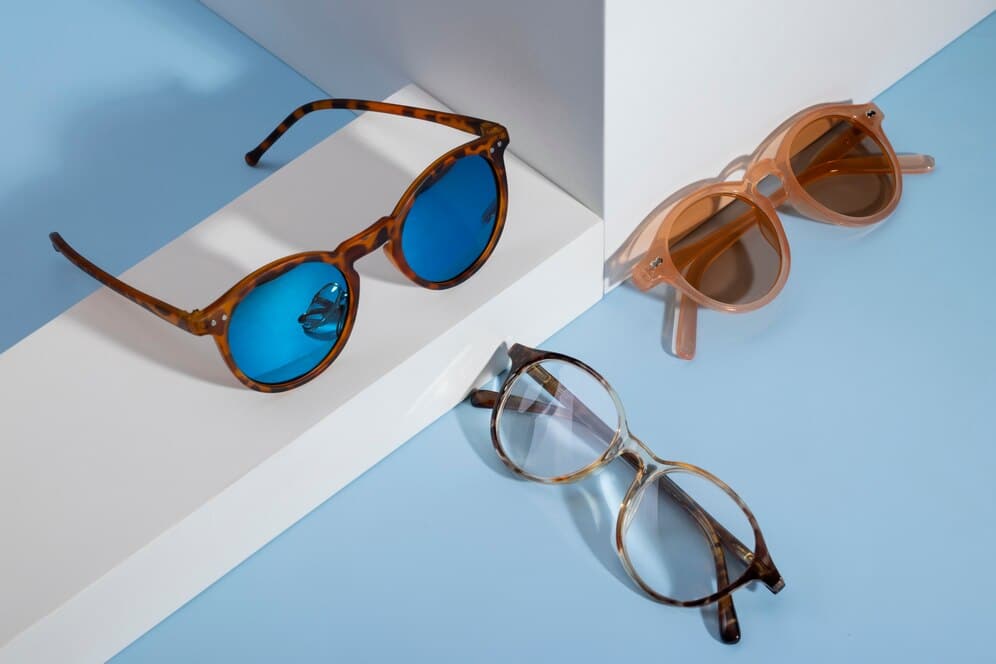
- Round frames: A classic and timeless choice, round frames suit a wide range of face shapes and are available in various sizes, from smaller, more understated designs to oversized, statement pieces.
- Cat-eye frames: Combining vintage glamour with a touch of flair, cat-eye frames add instant personality to your look. The upward sweep of the frame offers a flattering effect on many face shapes.
- Aviator frames: Originally designed for pilots, aviator frames have become a staple in eyewear fashion. They provide a cool, retro vibe and versatile appeal that suit various face shapes and styles.
By considering your face shape, personal preferences, and current trends, you’ll be well-equipped to find the perfect eyewear style to complement and enhance your unique look.
3. Practical Considerations: Balancing Style and Functionality
While aesthetics play a significant role in selecting eyewear, it’s essential not to overlook practical considerations, ensuring an ideal balance between style and functionality. Key factors to consider include:
- Comfort and fit: Properly fitting eyewear should comfortably rest on your nose and ears without leaving marks or causing discomfort. Ensure that the frame’s width matches the width of your face, with the eye resting at the centre of the lens opening.
- Lens type: Depending on your visual requirements, lens type and size will influence your frame choice. For instance, if you require progressive or multifocal lenses, you’ll need a frame with enough vertical lens space to accommodate the different prescription zones.
- Durability: Understanding the material’s durability and resistance to everyday wear and tear will save you time and money in the long run. Be sure to ask your optician about frame materials that best suit your lifestyle and activities.
By considering these practical considerations, you’ll be one step closer to finding eyewear that is not only stylish but also functional, offering an elevated visual experience.
4. Expert Assistance: The Value of Professional Guidance
With countless eyewear options available, having professional guidance from experienced opticians is invaluable during the selection process. Our dedicated team can:
- Provide tailored advice: By taking into account your unique needs and preferences, we can recommend frames and styles that are perfectly suited to your requirements and lifestyle.
- Ensure correct fit and adjustability: Our experts will make any necessary adjustments to the frames, ensuring optimal comfort and visual acuity.
We offer personalised lens recommendations. Considering your visual requirements, we can suggest lens types, coatings, and treatments to optimise your eyewear experience.
A qualified optician can streamline the process, ensuring that you find the ideal eyewear that marries style, comfort, and function.
Conclusion
Selecting the perfect eyewear is an exciting journey that comprises many considerations, from frame materials and styles to practicality and functionality. By keeping these factors in mind, along with expert guidance, you can confidently find eyewear that embodies your unique sense of style and enhances your everyday experiences.
At Perspective Optometrists, our mission is to provide you with a personalised eyewear service that prioritises your visual needs while celebrating your individuality. Visit our optometrist in London and discover our exclusive, niche eyewear collections and industry-leading eye care services. Allow us to help you navigate this fascinating world of eyewear, ultimately guiding you towards the perfect pair that will elevate both your vision and your overall style for years to come.


Leave a Reply
Want to join the discussion?Feel free to contribute!