
The right glasses for your face shape are usually the ones that contrast with it. Angular frames sharpen a round face, softer curves balance a square jaw, and a frame about as wide as the widest part of your face keeps everything in proportion. This guide walks through each face shape, explains why contrast works, and shows where the rules are worth breaking once you have tried frames on properly.
How we look at faces
Face shape is a starting point, not a verdict. When someone sits down to choose frames with us, we look at the outline, but also at the brows, the bridge of the nose, the spacing of the eyes and your colouring. Two round faces can need very different frames, and the most common habit we see is someone reaching for a copy of their last pair because it feels safe.
To find your own shape, pull your hair back, stand in front of a mirror and compare three widths: your forehead, your cheekbones and your jaw. Then look at length against width. Most people are a mix of two shapes, which is completely normal.
| Check the numbers on your current pair. Inside the arm or on the bridge of most frames you will find three measurements in millimetres: lens width, bridge width and arm length. If a pair fits you comfortably, those numbers are a useful guide when you try something new. |
If you would like to see how this plays out on real frames, our independent frames collection is chosen from small designers rather than bought in bulk, so you have shapes to try that you will not see on everyone else.
Round faces
If your face is round, look for frames with clear angles and structure. Rectangular, square or geometric shapes that are slightly wider than your face are the classic frames for a round face.
A round face is roughly as wide as it is long, with full cheeks and a soft jawline. Angular frames add definition and make the face read as a little longer and slimmer. A frame with a strong top line also lifts the eye upwards.
Small, round frames tend to echo the curves rather than balance them. The statement shapes from Anne & Valentin, the independent French brand from Toulouse, are a good example of the confident lines that sit well on a round face.
RUPAL RECOMMENDS: If your prescription is strong, bring it with you when you choose frames. A smaller, rounder frame often keeps the lens edges thinner, so the shape you love and the shape that works for your lenses are best decided together.
Oval faces
If your face is oval, most frame shapes will suit you, so the main thing to get right is width. Choose frames that are about as wide as the broadest part of your face.
Oval faces are slightly longer than they are wide, with balanced proportions and a gently rounded jaw. Because there is nothing to correct, frames for an oval face can be more adventurous, as long as the scale stays in proportion. This is where a bold, colourful frame from Sabine Be, or one of the nature inspired colour combinations from SALT., can really come into its own.
Square faces
If your face is square, softer shapes work best. Round, oval or cat eye frames take the edge off a strong jaw and brow, which makes them the natural frames for a square face.
A square face has a broad forehead, defined cheekbones and an angular jawline, with width and length fairly even. Curved frames add contrast, and frames that sit slightly higher on the face draw attention up towards the eyes.
Finer rims help too, because a heavy frame adds to the angles. The handmade frames from Rolf, the Austrian brand known for working with natural materials, have a warmth that softens a strong face without losing its character.
Heart shaped and diamond faces
If your face is heart shaped, choose frames that are lighter at the top and slightly wider towards the bottom. Rimless, semi rimless and bottom heavy styles are the most flattering frames for a heart shaped face.
A heart shaped face is widest at the forehead and narrows to a smaller chin. Frames that are heavy across the top add to that width, so look for a lighter brow line or a rimless design that lets the lower half of your face carry more weight. Lindberg’s rimless titanium frames suit this well, because they sit so lightly on the face.
A diamond face is narrow at the forehead and jaw, with the widest point at the cheekbones. Oval, cat eye and rimless frames suit diamond faces, and a little detail along the brow line helps balance wide cheekbones.
Long faces
If your face is long, choose frames with plenty of depth, such as deeper rectangular or square shapes, and look for detail at the sides to add width.
A long face, sometimes called oblong, is noticeably longer than it is wide, often with a straight cheek line. Deeper frames break up the length, and a frame with a lower bridge can make the nose look a little shorter.
Coloured or decorative arms draw the eye outwards and add width. Small, narrow frames can make a long face look longer still.
The rule of contrast
The simplest rule in frame styling is contrast. A frame that echoes your face shape exaggerates it, while a frame that contrasts with it creates balance. Round faces suit angles, and angular faces suit curves.
Scale matters as much as shape. Finer features usually suit finer frames, while stronger features can carry a bolder rim. Your brows should ideally follow the top line of the frame, rather than sit well above it or disappear behind it.
Then there is the rule worth breaking. Plenty of people with round faces look wonderful in round frames, because colour or personality carries it. Face shape tells you where to start, not what you are allowed to wear, and you can see that range for yourself in our happy client gallery.
RUPAL RECOMMENDS: If you wear varifocals, check the depth of a frame before you fall for its shape. A frame that is too shallow can squeeze the reading area of the lens, however good it looks on you.
Why a styling appointment helps
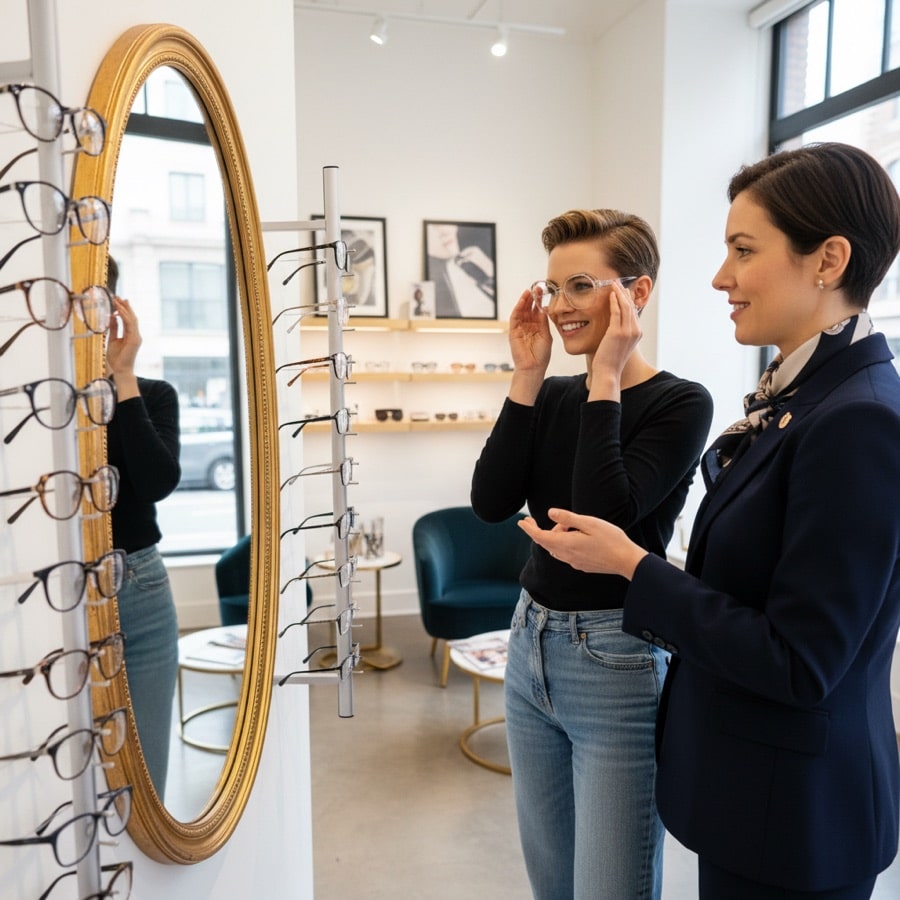
A styling appointment helps because you see frames on your own face, with someone beside you who knows what to try next and will tell you honestly when a pair is not doing you any favours.
A guide can only point you in a direction. In person, our trained eyewear stylist looks at your face shape alongside your colouring, your prescription and how you spend your day. You are not rushed, there is time to try things properly, and nobody minds if you work through twenty pairs over a cup of tea.
Because Perspective is optometrist led, your frames and your lenses are considered together. It is far better to find out that a frame will not suit your lenses before you have fallen for it. Adjustments and aftercare are part of the service, so the fit you leave with is a fit that lasts.
If colour is your next question, our guide to choosing a frame colour for your skin tone and hair goes into more depth, and our guide to glasses frame materials explains how acetate, titanium and wood feel to wear.
| Ask for time with our stylist when you book. The styling consultation is complimentary, and the details sit alongside our frame and lens prices on our pricing and FAQ page. |
Your questions about glasses for your face shape
How do I know what face shape I have?
Pull your hair back, look straight into a mirror and compare the width of your forehead, cheekbones and jaw, then your face’s length against its width. Most people are a blend of two shapes, so go by your most noticeable feature.
Do the same face shape rules apply to sunglasses?
Yes. The same principle of contrast applies, although sunglasses are often chosen a little larger for more coverage. If you need your prescription in them, the frame has to suit your lenses as well as your face, and our sunglasses page covers the options.
Should my glasses be wider than my face?
Your frames should be about as wide as the widest part of your face, or very slightly wider. Frames that are too narrow make the face look wider, while frames that are too wide slip down and move the lenses away from where they should sit. Glasses are fitted so that you look through the centre of each lens, which the College of Optometrists explains in its guide to glasses.
Does my prescription affect which frames I can choose?
It can, a little. Stronger prescriptions usually look and feel better in smaller frames, which keep the lenses thinner, and varifocals need a frame with enough depth for the reading area. Your stylist and optometrist can check this together before you commit to a pair.
Try it on your own face
Finding the right glasses is easier with a second pair of eyes. Book an appointment at our practice on England’s Lane in Belsize Park, browse our frames from independent designers and ask for time with our stylist. If you would like to arrange a styling session on its own, get in touch.
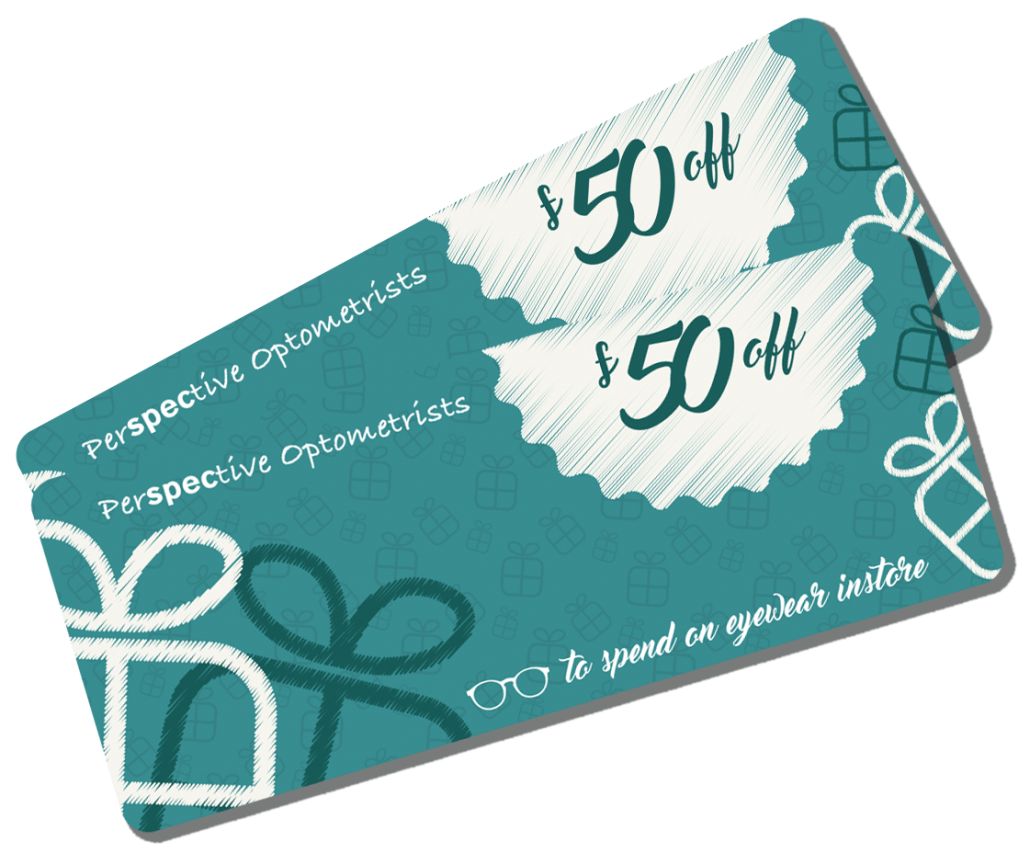
Not ready to book yet? Take a look at our current voucher offer instead.